Introduction
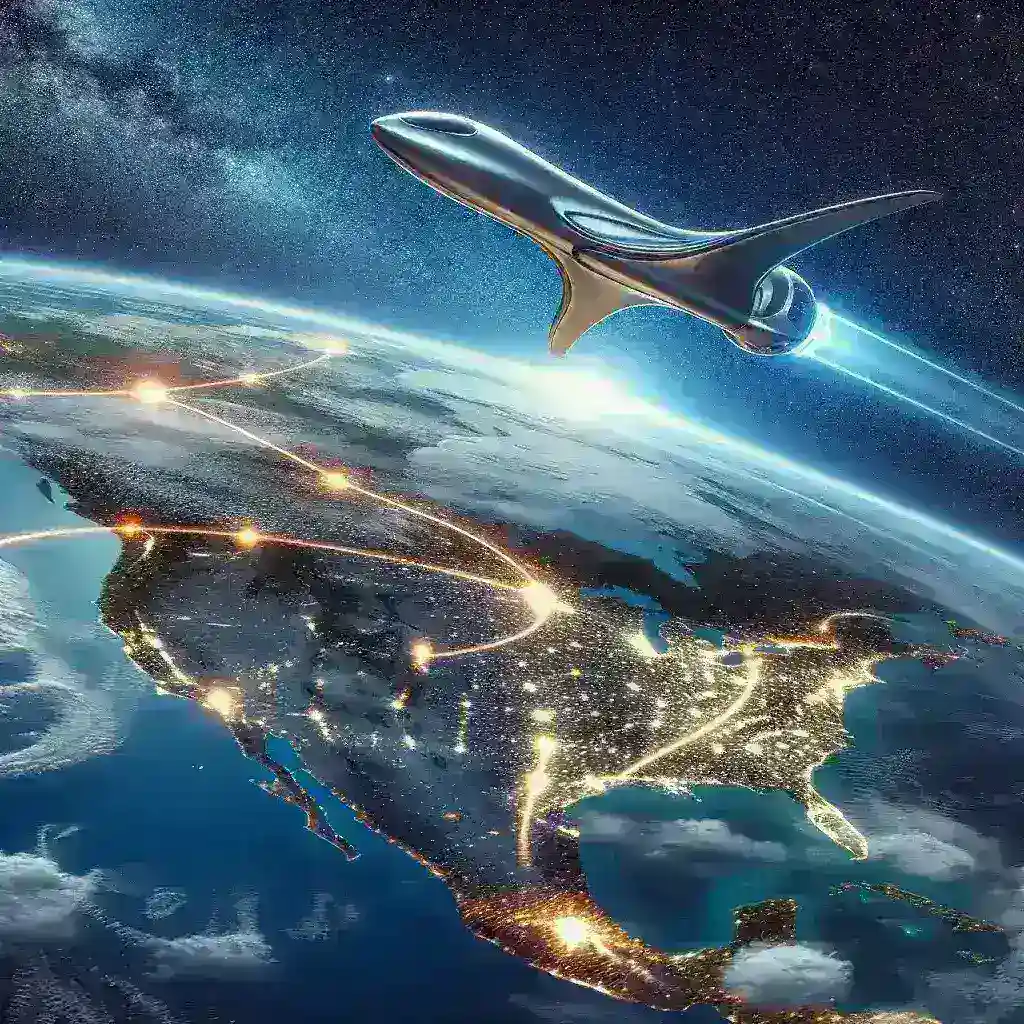
The world of air travel is on the brink of a revolutionary change, with suborbital point-to-point travel emerging as a game-changer in reducing international flight times to under two hours. This innovation not only promises to reshape how we think about distance and travel but also opens up new possibilities for global connectivity and commerce.
Understanding Suborbital Travel
Suborbital travel involves spacecraft that reach the edge of space but do not complete an entire orbit around the Earth. Unlike traditional airline flights that travel within the atmosphere, suborbital flights ascend to altitudes higher than 100 kilometers (62 miles), where the curvature of the Earth can be observed. These flights typically last only a few minutes in space but can connect distant destinations in a fraction of the time.
The Technology Behind It
The technology behind suborbital travel is rapidly advancing, driven by both private aerospace companies and government agencies. Companies like SpaceX, Blue Origin, and Virgin Galactic are at the forefront, developing reusable spacecraft that can facilitate these quick hops between international cities.
How It Works
- Launch: The spacecraft is launched vertically from a designated spaceport.
- Ascent: It ascends rapidly, reaching the edge of space within minutes.
- Descent: After a short period in microgravity, the spacecraft descends back into the atmosphere, gliding to a runway landing.
Historical Context
The concept of suborbital travel isn’t entirely new. The idea of reaching the edge of space has been a part of human exploration since the early days of rocketry. However, it wasn’t until recent innovations in technology and an increase in private investment that the feasibility of commercial suborbital travel became a reality.
Key Milestones
Notable milestones include:
- The X-Prize (2004): The first privately-funded spacecraft, SpaceShipOne, completed a suborbital flight, paving the way for future commercial space travel.
- Blue Origin’s New Shepard (2015): Successfully completed its first uncrewed flight, demonstrating the safety and reliability needed for future passenger flights.
- Virgin Galactic (2021): Conducted its first successful crewed spaceflight, marking a new era in commercial suborbital travel.
Benefits of Suborbital Point-to-Point Travel
1. Reduced Travel Time
The most significant advantage of suborbital travel is the dramatic reduction in travel time. Imagine flying from New York to London in under two hours—this is no longer a distant dream but a tangible reality with suborbital flights.
2. Increased Connectivity
Suborbital travel can connect cities that are currently difficult to reach. It opens up new routes, making international travel more accessible and fostering stronger business and cultural exchanges.
3. Environmental Impact
While suborbital flights may seem counterintuitive regarding environmental impact, advancements in technology aim to reduce the carbon footprint of these journeys compared to traditional long-haul flights. New propulsion systems can potentially be cleaner and more efficient.
Challenges and Concerns
1. Cost
The cost of suborbital travel remains relatively high, making it less accessible to the average traveler. As technology matures, prices are expected to decrease, but initial costs may limit widespread adoption.
2. Regulatory Issues
Governments and international regulatory bodies must develop frameworks to ensure safety and security in suborbital travel. This includes air traffic management, licensing of spaceports, and protocols for emergency situations.
3. Public Perception
Many people are still wary of space travel, primarily due to safety concerns and the novelty of the experience. Overcoming these perceptions will be crucial for the success of suborbital travel.
Future Predictions
Experts predict that by the next decade, suborbital travel could become a mainstream option for international travel. As more companies enter the market and technological advancements continue, we may see:
- A reduction in ticket prices, making suborbital travel accessible to a broader audience.
- Increased demand for luxury travel experiences that include suborbital flights.
- Integration of suborbital travel into existing air travel networks, allowing seamless transitions between different modes of transportation.
Conclusion
Suborbital point-to-point travel is poised to transform the landscape of international travel, drastically reducing flight times and enhancing global connectivity. As technology evolves and regulatory frameworks are established, we could soon be living in a world where the vast distances that once took hours or even days to traverse can be covered in mere minutes. The future of travel is not only about speed but also about fostering connections and experiences that transcend borders.
Leave a Reply